
Most homeowners never ask this question — until the ceiling starts staining or a contractor hands them a replacement quote. By then, the pressure to make the right call is already at its peak.
Pick the wrong material and you could be back on that ladder in 15 years, writing another stressful work order. Pick the right one and your roof outlives your mortgage — maybe even your ownership of the home.
This guide breaks down the metal roofing vs tile roofing debate with real data, performance comparisons, and climate-specific guidance so you can make a decision you won’t regret in 2035.
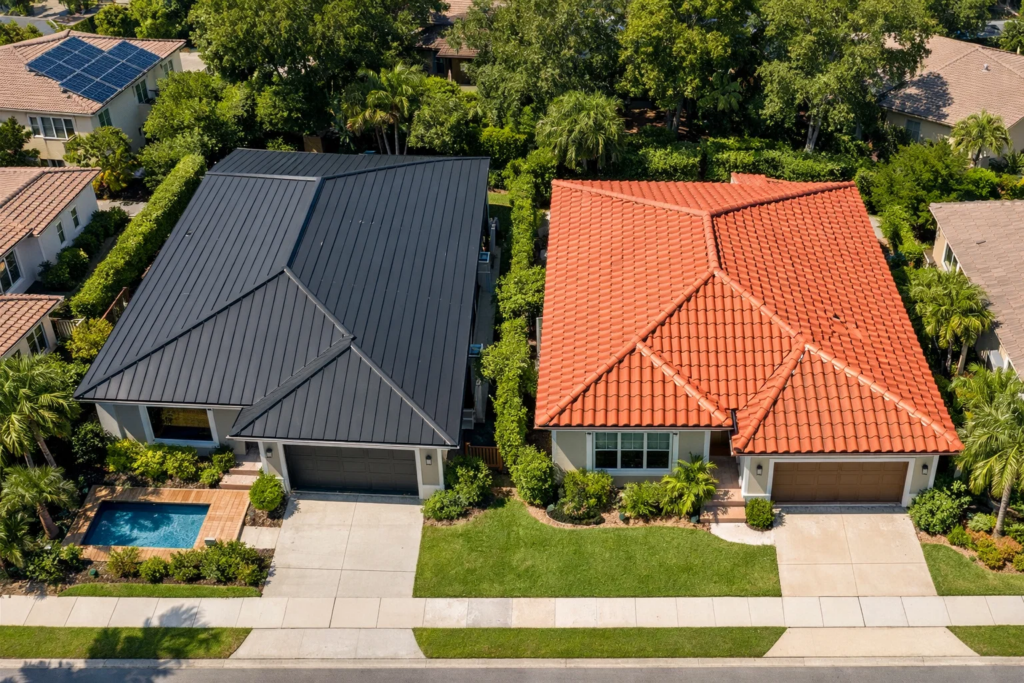
When homeowners search for the best roofing material for longevity, lifespan is always the first question — and rightfully so. A roof’s lifespan directly determines how often you’ll face a replacement and how much disruption you’ll deal with over the decades.
Metal roofing — including standing seam, corrugated panels, and stone-coated steel — carries an average lifespan of 40 to 70 years, according to the Metal Roofing Alliance. Premium copper and zinc systems can last well over 100 years with minimal maintenance. The material resists rot, mildew, and insect damage by nature, which are among the most common lifespan killers in other roofing types.
Tile roofing — spanning clay, concrete, and slate variants — competes strongly. Clay and slate tiles regularly last 50 to 100+ years, while concrete tiles perform in the 30–50 year range. According to the National Roofing Contractors Association (NRCA), clay tile is among the longest-lasting roofing materials available to residential homeowners today.
The honest answer? Both materials outlast traditional asphalt shingles (15–30 years) by a wide margin. The real differentiator isn’t just the tile or metal panel itself — it’s the underlayment, installation quality, and climate conditions around that material.
| Material | Average Lifespan | Maintenance Frequency |
|---|---|---|
| Standing Seam Metal | 50–70 years | Every 10–15 years |
| Stone-Coated Steel | 40–50 years | Every 5–10 years |
| Clay Tile | 50–100 years | Every 5–10 years |
| Concrete Tile | 30–50 years | Every 5–7 years |
| Slate Tile | 75–150 years | Every 10–20 years |
| Asphalt Shingles | 15–30 years | Every 3–5 years |
Key Takeaway: Both metal and tile roofs dramatically outlast asphalt shingles, but slate tile and copper metal systems offer the longest verified lifespans in the industry.
For more on roofing material performance, explore our Roofing Services at Royal Roofs.
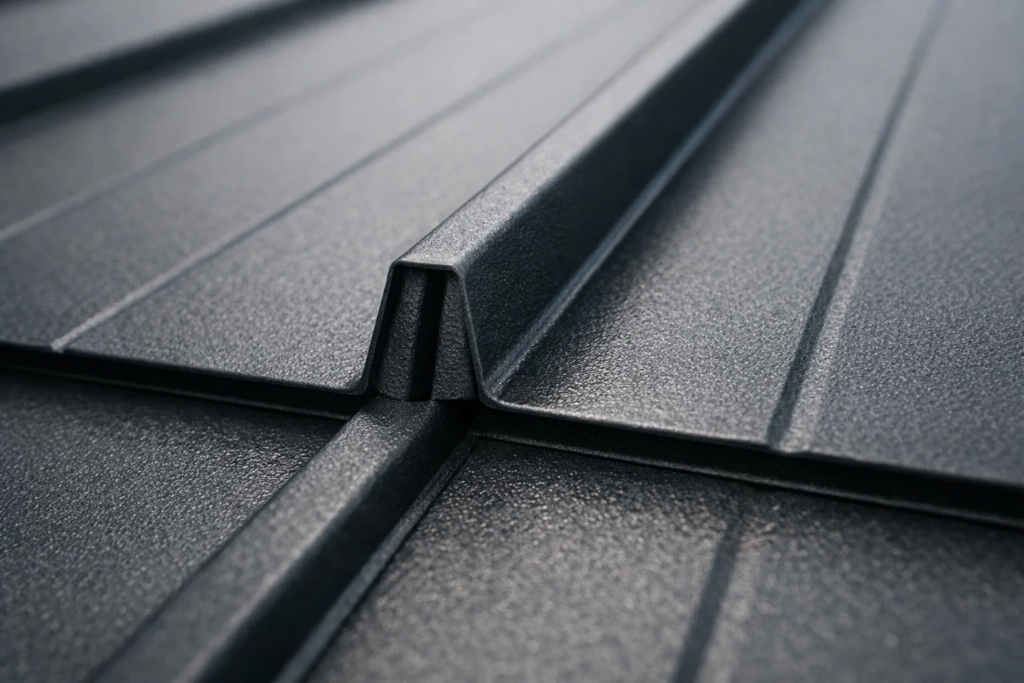
Before committing to metal, every homeowner deserves a clear-eyed breakdown of what they’re gaining — and what trade-offs come with it.
✅ Pros of Metal Roofing
❌ Cons of Metal Roofing
✅ Pros of Tile Roofing
❌ Cons of Tile Roofing
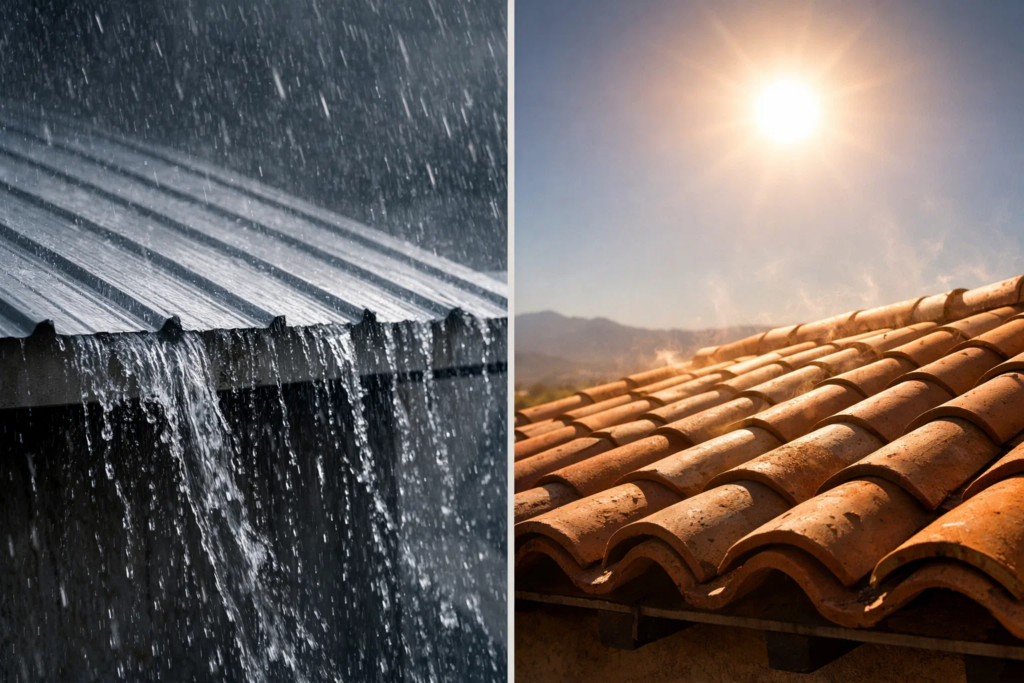
Climate is arguably the most important factor in the metal roofing vs tile roofing decision. A roofing material that thrives in one region may crack and fail in another.
Metal Roofing in Extreme Weather: Metal excels in high-wind environments. Most standing seam systems are rated for winds up to 140 mph, making them a top choice in hurricane-prone regions. Metal also handles heavy snow loads effectively — its smooth surface allows snow to slide off rather than accumulate. In wildfire-prone areas, a Class A metal roof is one of the most protective options available.
The weakness? Hail. Soft metals like aluminum and copper can show cosmetic denting from golf-ball-sized hail or larger. Steel systems perform better in hail-prone zones — look for Class 4 impact-resistant ratings, the highest available.
Tile Roofing in Extreme Weather: Clay and concrete tiles are exceptional in hot, dry climates — their thermal mass absorbs heat during the day and releases it slowly at night, reducing interior temperature swings. According to the Florida Solar Energy Center, clay tile roofs can lower attic temperatures by up to 30% compared to asphalt shingles.
The weakness? Weight and cold climates. Clay tile can weigh up to 900 lbs per square (100 sq. ft.), requiring reinforced roof framing. In freeze-thaw climates, clay tile can crack under repeated temperature cycling. Concrete tile performs better in these conditions but still requires a structural assessment before installation.
| Weather Condition | Metal Roofing | Tile Roofing |
|---|---|---|
| High Winds (100+ mph) | ⭐⭐⭐⭐⭐ Excellent | ⭐⭐⭐ Good (can crack) |
| Heavy Snow/Ice | ⭐⭐⭐⭐⭐ Excellent | ⭐⭐ Poor (weight risk) |
| Intense Heat/Sun | ⭐⭐⭐⭐ Very Good | ⭐⭐⭐⭐⭐ Excellent |
| Hail Impact | ⭐⭐⭐ Good (steel) | ⭐⭐ Fair (can crack) |
| Wildfire Exposure | ⭐⭐⭐⭐⭐ Excellent | ⭐⭐⭐⭐ Very Good |
| Freeze-Thaw Cycles | ⭐⭐⭐⭐⭐ Excellent | ⭐⭐ Poor (clay) |
Key Takeaway: Metal roofing wins in cold, high-wind, and wildfire climates. Tile roofing dominates in hot, dry Mediterranean-style environments.
Even the best roofing material fails when installed or maintained incorrectly. These are the six most costly mistakes homeowners make:
1. Hiring an unqualified installer Metal roofing requires specialized training — particularly for standing seam systems. An improperly fastened panel can lead to water infiltration and voided warranties. Always verify certifications before signing a contract.
2. Ignoring structural load capacity for tile Clay and slate tile are heavy. Installing them on a roof framed for asphalt shingles without a structural engineer’s assessment is dangerous and can result in sagging or collapse under snow load.
3. Using incompatible fasteners on metal Mixing metals (e.g., steel fasteners on aluminum panels) causes galvanic corrosion — a chemical reaction that accelerates deterioration. Always match fastener material to panel material.
4. Skipping the underlayment upgrade Both metal and tile require high-quality synthetic underlayment. Standard felt paper degrades in 10–15 years, far short of either material’s lifespan. Use a 50-year-rated synthetic underlayment to match your roof’s potential.
5. Neglecting ridge cap and flashing details More than 90% of roof leaks originate at penetrations, valleys, and flashings — not the field of the roof itself. Cutting corners here eliminates the advantage of a premium roofing material entirely.
6. Over-walking tile roofing during maintenance Tile is brittle under concentrated foot pressure. Walking incorrectly during inspections or gutter cleaning is one of the most common causes of cracked tile. Always step on the lower third of a tile near a rafter line, and use crawl boards for extended access.
The right choice comes down to three decision factors: climate, home architecture, and intended tenure in the home.
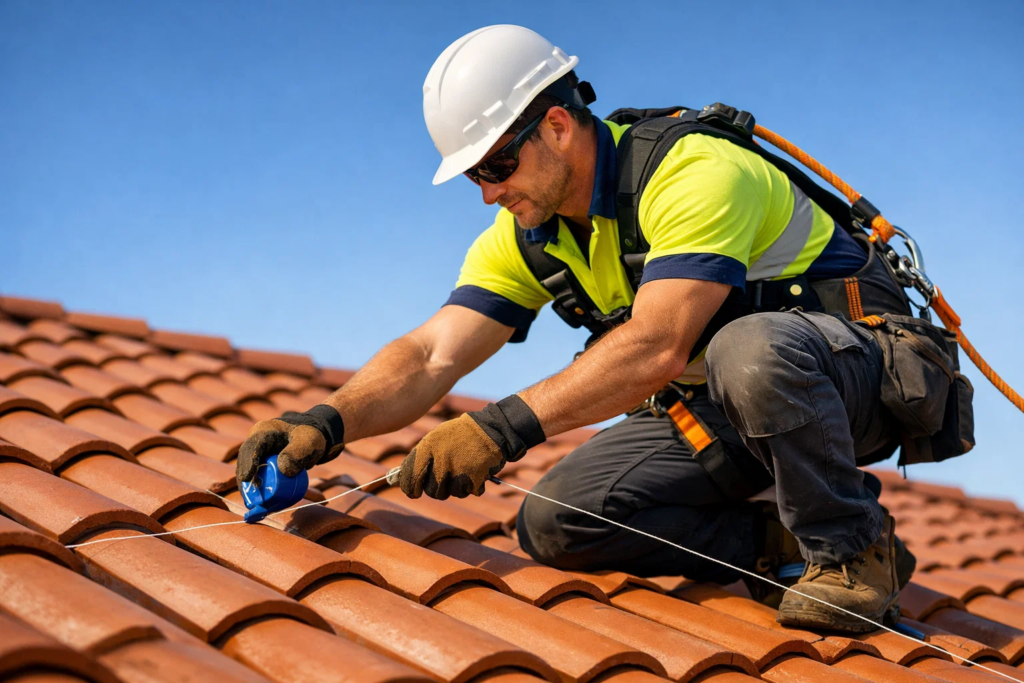
Before your contractor breaks ground, here is what every homeowner must understand:
Use this checklist immediately after your new roof is completed:
✅ DOs
❌ DON’Ts
For a comprehensive installation walkthrough, explore our blogs.
Aesthetic unfamiliarity is the biggest barrier — many associate metal with industrial buildings. That’s changing fast; the Metal Roofing Alliance reported a 12% rise in residential installations between 2020 and 2023.
Tiles overlap to channel water downward course by course. A flat sheet without adequate slope pools water and fails quickly. The tile profile also creates an air gap beneath, improving both ventilation and thermal performance.
Steel and Class 4 impact-rated metal handles hail far better than tile. Large hail can crack clay or concrete tile outright, while metal may show only cosmetic denting with structural integrity intact.
Both add meaningful resale value. Metal has broader cross-market appeal due to its versatility in colour and profile. Tile performs strongest in regions where it matches local architectural style.
No. Tile is too heavy and uneven to serve as a substrate. A full tear-off is required — metal panels need a flat, structurally sound decking surface to install correctly.
Every 3–5 years and after major storms. Key tasks include replacing cracked tiles, re-sealing ridge caps, and clearing valley debris. Skipping inspections is the leading cause of premature tile failure.
Ignoring climate compatibility. A material that thrives in a hot, dry region can crack and fail in a freeze-thaw climate within a decade. Always match material to your dominant local weather conditions
The metal roofing vs tile roofing debate doesn’t have a universal winner — it has the right answer for your specific home, climate, and long-term goals.
Three takeaways to carry forward:
The best roof is one that’s been matched to your conditions, installed by a certified professional, and maintained on schedule. Make that decision once — and make it well.
Ready to move forward? Contact our roofing experts for a personalised recommendation based on your home and location.
Don’t leave a 50-year decision to guesswork. Our roofing experts at Royal Roofs are ready to assess your home, match you to the right material for your climate, and back the work with a certified warranty.
Get a Free Roof Consultation — No pressure. No obligation. Just expert guidance you can build on.
Or explore our completed roofing projects to see the quality of work we deliver.