
Your roof doesn’t fail overnight. It sends signals — and most homeowners miss them until water is dripping through the ceiling.
By the time visible interior damage appears, the structural deterioration has usually been building for months, sometimes years. Ignoring the early warning signs of roof failure doesn’t save money. It multiplies the cost. What could have been a planned roof replacement becomes an emergency repair job — with damaged insulation, ruined ceilings, and mould remediation added to the bill.
This guide walks you through the five most critical signs that your roof needs replacement, not just another patch job — so you can act before the next monsoon season turns a manageable problem into a home emergency.
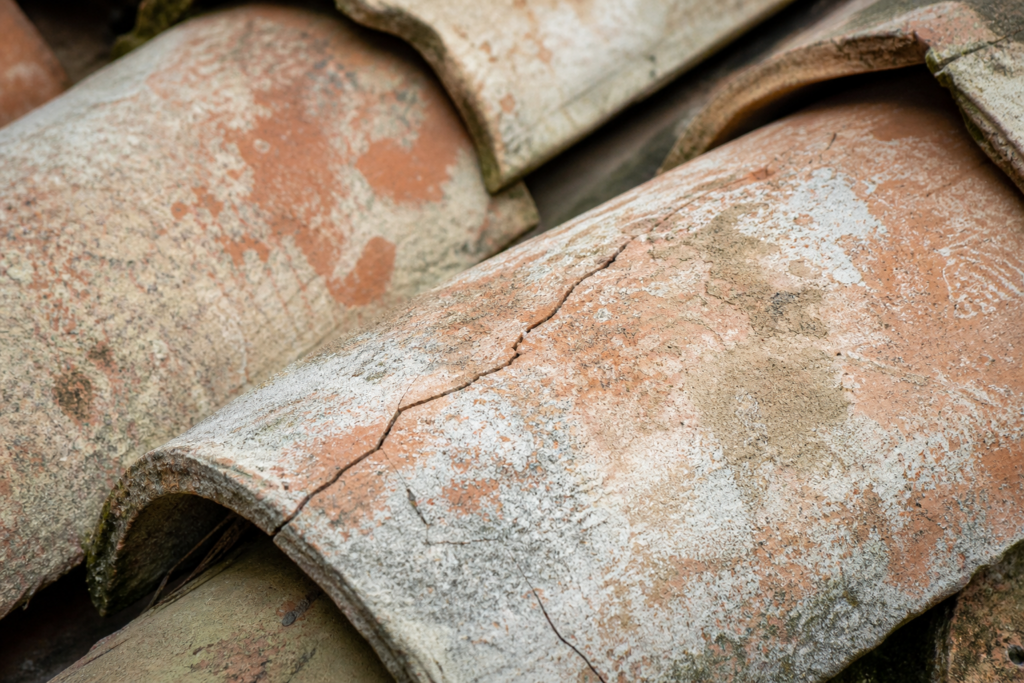
Age is the single most reliable predictor of roof failure — and most homeowners don’t know how old their roof actually is.
Different roofing materials have different expected lifespans. Once a roof crosses that threshold, even a structurally “fine-looking” surface is statistically at high risk of failure within a short period.
Here’s a practical lifespan reference for common roofing types used in Indian homes:
| Roofing Material | Average Lifespan | Replacement Recommended By |
|---|---|---|
| Clay / Terracotta Tiles | 25–40 years | Year 30 |
| Concrete Tiles | 20–30 years | Year 25 |
| Metal Roofing (Galvanised) | 25–40 years | Year 30 |
| Asphalt / Bitumen Sheets | 15–20 years | Year 17 |
| Fibre Cement Sheets | 20–30 years | Year 22 |
| Polycarbonate Sheets | 10–15 years | Year 12 |
If your roof is within 5 years of its expected end-of-life — or past it — replacement planning should start now, regardless of whether you’re seeing visible problems.
Key Takeaway: A roof that looks fine from the ground may be structurally compromised. Age alone is a valid reason to schedule a professional inspection.
The challenge is that many homeowners in India don’t know when their roof was originally installed, especially in older properties. If you’re unsure, a qualified roofing professional can assess the material condition and give you a realistic remaining-life estimate.
For a comprehensive view of what a professional roof inspection and replacement involves, visit the Royal Roofs Services page.
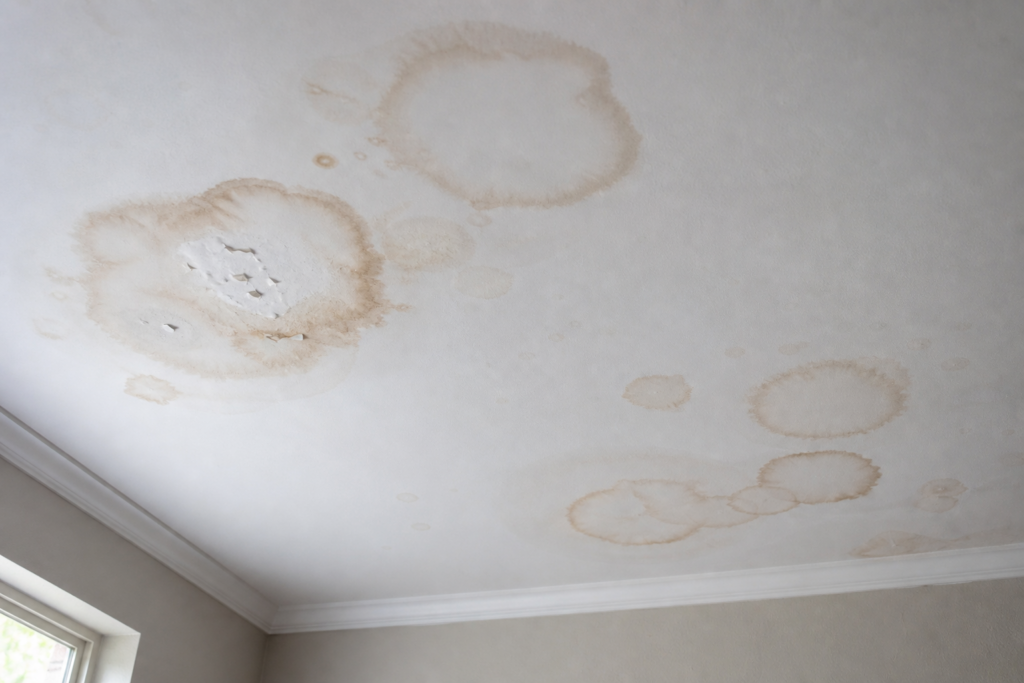
A single leak in one spot after a heavy storm might be a repair. Multiple leaks — or the same leak that keeps coming back after patching — is a replacement conversation.
Recurring leaks are one of the most mismanaged roofing problems in residential properties. Homeowners spend money on repeated patch jobs, each one buying a few more months, while the underlying problem — compromised roofing membrane, deteriorated flashing, or structural water ingress — continues to worsen beneath the surface.
A qualified inspector will distinguish between a localised leak (repairable) and systemic water ingress (replacement territory). If you’ve had the same area repaired more than twice, the third time should trigger a full assessment.
Learn more about how leaks develop and worsen over time in our detailed guide on how to repair a leaking roof — and understand when repair stops being a viable option.
A roof that leaks in three places doesn’t need three repairs. It needs one honest conversation about replacement.
A sagging roof is a structural emergency. This is not a sign — it is an alarm.
Sagging or visible deformation in your roofline indicates that the structural components beneath the surface covering — the rafters, joists, decking, or support beams — have been compromised. This happens when:
Stand at the edge of your property and look at your roofline horizontally. A healthy roof has clean, straight lines from ridge to eave. Any visible:
…are all signs of structural compromise. This is not a situation where temporary repairs restore integrity. The underlying structure must be addressed — which, in most cases, requires full roof replacement along with structural reinforcement.
A sagging roof does not wait for a convenient time to fail. Act immediately.
If you have noticed any deformation in your roof structure, contact a roofing professional for an emergency assessment. You can reach Royal Roofs directly through the contact page for urgent evaluation.
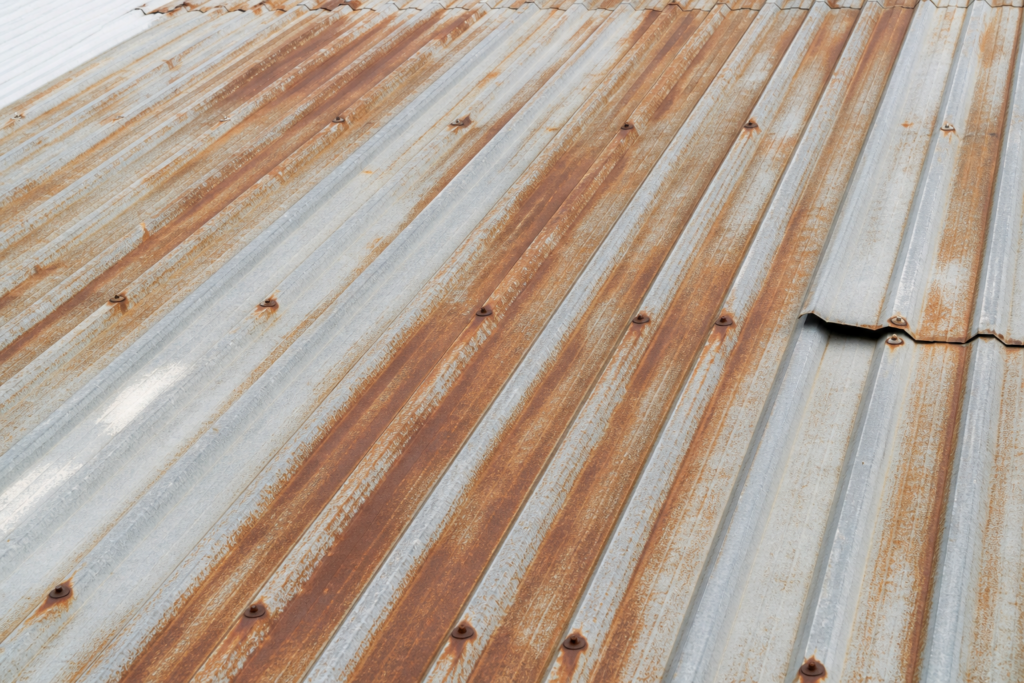
What you can see from the ground is a fraction of the actual damage. But what you can see matters.
Surface-level damage to your roofing material — whether clay tiles, metal sheets, concrete tiles, or fibre cement — is a direct indicator of the roof’s compromised ability to shed water and protect your home. Different materials show damage differently:
Even if only 20–30% of your roof surface shows visible damage, the structural impact is often far greater than what’s visible.
For a detailed comparison of how different roofing materials age and what damage to expect from each, read our guide on Metal Roofing vs Tile Roofing — it will help you understand what your current material’s damage patterns mean in practical terms.
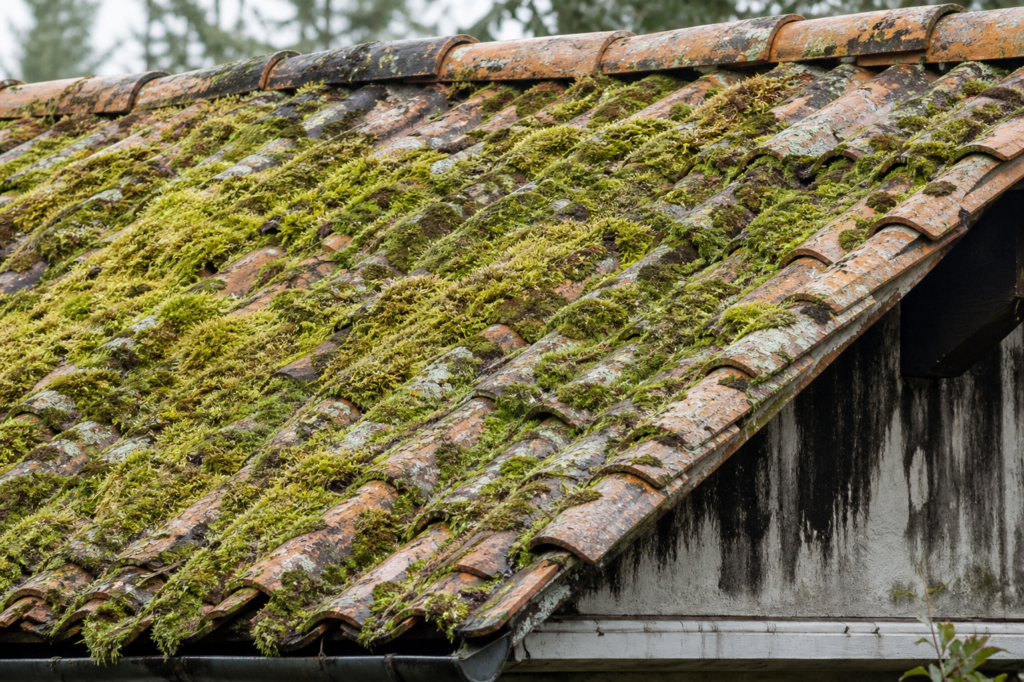
What looks like a cosmetic issue is actually biological and structural deterioration happening in real time.
Moss, algae, and lichen growth on roofs is extremely common in India’s humid, tropical, and coastal climates. Most homeowners treat it as an aesthetic problem — something to be pressure-washed away. In reality, organic growth is a symptom of underlying moisture retention, which is one of the most damaging long-term forces a roof faces.
If your roof uses composite or asphalt-based materials, check your gutters and downpipes after rainfall. Granules washing off the roof surface and collecting in gutters indicate that the protective coating is failing. Once granule loss becomes significant, the underlying material is exposed to UV and moisture damage — and the clock starts ticking on failure.
Moss doesn’t mean your roof is old. It means your roof is wet — and staying wet. That’s the real problem.
Understanding why regular maintenance prevents moss, algae, and granule loss from escalating is covered in depth in our article on the importance of regular roof maintenance. Read it to understand what a proper maintenance schedule looks like — and when maintenance stops being enough.
This is the question every homeowner faces — and the answer isn’t always obvious.
Use this framework to make the decision with clarity:
| Situation | Repair | Replace |
|---|---|---|
| Single isolated leak, roof under 15 years old | ✅ | — |
| Multiple leaks across different areas | — | ✅ |
| Localised tile damage (under 10% of surface) | ✅ | — |
| Widespread tile cracking or breakage | — | ✅ |
| Roof age within expected lifespan | ✅ | — |
| Roof at or past expected end-of-life | — | ✅ |
| Minor moss growth, caught early | ✅ | — |
| Structural sagging or deformation | — | ✅ |
| Repair cost exceeds 40–50% of replacement cost | — | ✅ |
The 50% Rule: If the cost of repairing your current roof exceeds 50% of the cost of a full replacement, replacement is almost always the smarter financial decision — especially when you factor in the extended warranty, new material lifespan, and elimination of recurring repair costs.
Repeated repairs are not savings. They are deferred replacement costs with added inconvenience.
If you’re unsure which path is right for your roof, a professional inspection gives you the information you need to decide without guessing. See what a thorough roofing assessment looks like through Royal Roofs’ completed projects.
Knowing the signs is only half the battle. Equally important is understanding the errors that turn manageable problems into expensive disasters.
1. Treating Symptoms Instead of the Cause Patching a single tile without inspecting the surrounding area misses the broader deterioration pattern. Every repair is an opportunity for a fuller assessment — don’t waste it.
2. Waiting for Interior Damage Before Acting By the time water appears on your ceiling, it has already passed through your roofing material, underlayment, insulation, and structural elements. Interior damage is a late-stage sign. Act on exterior signs before they reach this point.
3. Assuming a New Coat of Waterproofing Fixes Everything Waterproofing treatments applied over a failing roof extend the lifespan by 1–3 years at most. They do not address structural issues, cracked tiles, failed underlayment, or organic growth that has already penetrated the surface.
4. Choosing Repair Contractors Who Don’t Offer Full Assessments A contractor who patches and leaves without offering a full roof condition report is not giving you the full picture. Always ask: “What’s the overall condition of the rest of the roof?”
5. Ignoring Roof Problems Before Monsoon Season India’s monsoon season puts every weakness in a roof under maximum stress. A roof that had minor issues in February often becomes a crisis by July. Pre-monsoon inspections are the single most cost-effective roofing action a homeowner can take.
6. Not Getting Multiple Opinions Before a Major Replacement If one contractor recommends full replacement, always get a second opinion before committing. Read our complete guide on how to choose the right roofing contractor to make sure you’re working with someone whose assessment you can trust.
The key factors are roof age, extent of damage, and repair history. If your roof is within 5 years of its expected end-of-life, if you’ve had the same area repaired more than twice, or if damage covers more than 30% of the surface, replacement is usually the better investment. A professional inspection gives you a definitive answer based on your specific roof’s condition.
Most residential roof replacements are completed within 2 to 5 days, depending on roof size, material type, complexity of the structure, and weather conditions. Your contractor should provide a specific timeline before work begins, with clear milestones and communication protocols for any delays.
The right material depends on your region’s climate, your roof’s pitch, and your budget. Metal roofing offers excellent durability and is ideal for heavy rainfall areas. Clay and concrete tiles provide strong thermal insulation and are well-suited to traditional architecture. For a detailed comparison, read our guide on Metal Roofing vs Tile Roofing.
In some cases, yes — if damage is genuinely isolated to one section and the rest of the roof is structurally sound with significant life remaining. However, partial replacements can create visible mismatches in material colour and texture, and if the surrounding material is aging, a full replacement often provides better long-term value. A professional assessment will clarify which approach makes sense.
At minimum, once every two years for roofs under 15 years old, and annually for older roofs. Additionally, always schedule an inspection after major weather events — heavy hailstorms, cyclones, or extended periods of intense rainfall. Pre-monsoon inspections are particularly valuable for homeowners across India. Read more about building a solid maintenance routine in our article on the importance of regular roof maintenance.
Yes. Moss holds constant moisture against your roofing material, accelerating surface degradation and eventually working into joints and cracks. In humid Indian climates, untreated moss growth can reduce a roof’s remaining lifespan by 5–10 years. It’s far cheaper to treat early than to replace prematurely.
Delay converts a planned, budgeted replacement into an emergency. You’ll face higher costs from: structural damage to rafters and joists, saturated and mould-compromised insulation, ceiling and wall damage requiring interior repairs, and the premium pricing of emergency contractors. Every month of delay on a failing roof increases the total remediation cost.
Verify their licence, insurance, and past project portfolio. Get at least three itemised quotes. Ask specifically about workmanship warranties. For a complete hiring framework, read our guide on how to choose the right roofing contractor.
Your roof communicates with you — through leaks, through sagging, through cracked tiles and spreading moss. The question is whether you listen early or late.
Here are the five signs to act on immediately:
None of these signs get better on their own. Every month of delay adds repair complexity and cost. The homeowners who protect their investment are the ones who schedule an inspection at the first sign of trouble — not after the ceiling collapses.
Your roof has been protecting your home for years. Give it the attention it’s earned.
Stop guessing. Get a professional assessment from a roofing team that gives you honest answers — not just the largest possible repair bill.
Royal Roofs provides thorough roof inspections, transparent condition reports, and expert recommendations tailored to your specific roof type, age, and budget. Whether you need a targeted repair or a full replacement, we’ll tell you exactly what your roof needs — and why.
Here’s what you get when you contact us:
The best time to inspect your roof is before it fails. The second best time is right now.
Not sure what type of roofing is best for your home? Explore our roofing services or browse our completed projects to see the quality we deliver on every job.