Your roof is your home’s first line of defence. When it fails, everything else is at risk.
Choosing the wrong roofing contractor doesn’t just waste money — it creates leaks, structural damage, and voided manufacturer warranties. Yet most homeowners hire based on the lowest quote alone.
This guide gives you a proven, step-by-step framework to hire the right roofing contractor — one who is licensed, insured, experienced, and worth every rupee you pay.
Roofing is not a DIY project — and it’s not a job for just any contractor either.
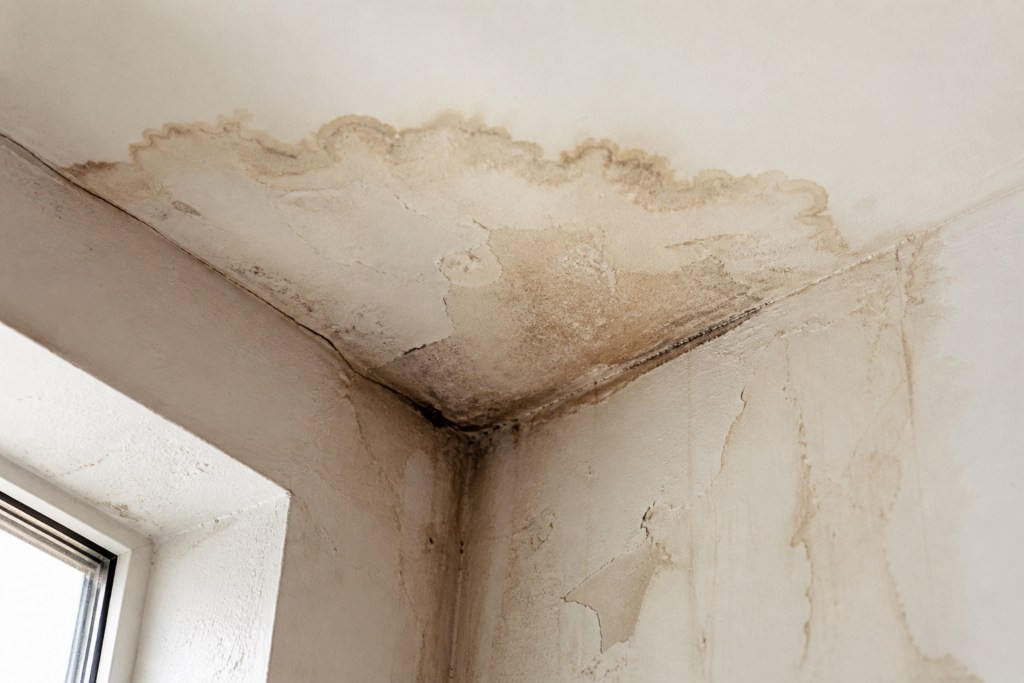
A poorly installed or repaired roof can fail within months. Water seeps into insulation, damages ceilings, weakens structural beams, and creates mould problems that cost far more to fix than the original roofing job. According to industry data, over 40% of roofing complaints filed with consumer forums relate to substandard workmanship from unlicensed or underqualified contractors.
The right roofing contractor protects your investment, your home, and your family.
Whether you need a full roof replacement, minor leak repairs, or a complete new installation, the professional you hire determines the quality, durability, and longevity of the final result.
Key Takeaway: A roofing job done right the first time saves you 3–5x the cost of fixing it later.
Before you let anyone climb on top of your home, verify these non-negotiables.
A legitimate roofing contractor must hold a valid contractor’s licence issued by the relevant state authority. In India, this typically falls under local municipal body registrations or state-level contractor licences depending on your region. Always ask for their licence number and verify it independently.
Never hire an unlicensed contractor, regardless of how low their quote is.
This is critical. Your roofing contractor must carry:
Ask for a certificate of insurance. Call the insurer to verify it’s active. If a worker falls from your roof and the contractor isn’t insured, you could be liable.
Top roofing material brands — whether TATA Bluescope Steel, Everest Industries, or others — offer certification programs to contractors who complete their training. A manufacturer-certified contractor is trained to install specific products correctly, which is required to keep the material warranty valid.
Pro Tip: A contractor with manufacturer certification can often offer extended warranties on both material and labour — something a generic roofer can never provide.
For a full view of certified roofing services available for your home, explore Royal Roofs’ complete services page.

Credentials on paper mean little without a proven track record.
Look for contractors with a minimum of 5 years in active roofing operations. The roofing industry sees a high rate of new entrants who disappear after a few jobs. A company that has been operational for years has survived the test of real-world projects, seasonal demands, and customer expectations.
Ask to see their previous work — specifically projects similar to yours in terms of roofing type (metal roofing, tile roofing, flat roofing, etc.) and project scale. A contractor who primarily handles industrial projects may not be the best fit for detailed residential work.
You can explore examples of high-quality roofing installations at Royal Roofs’ project gallery.
Request at least 3 references from past clients with similar projects. Call them. Ask specifically:
Also check Google Business Profile reviews, Justdial ratings, and any local builder association listings. A contractor with consistent 4.5+ star ratings across multiple platforms is significantly more reliable than one with only a handful of testimonials on their own website.
The right questions reveal more than any brochure ever will.
Before signing anything, ask your shortlisted contractors these key questions:
1. Are you licensed and insured? (Ask for documentation — not just a yes)
2. How long have you been in the roofing business?
3. Do you handle this type of roofing specifically? (Metal vs tile vs flat vs slope — each requires different expertise)
4. Who will actually do the work — your team or subcontractors? Many contractors win contracts and outsource to whoever’s cheapest. This creates accountability gaps.
5. What roofing materials do you recommend and why? A knowledgeable contractor explains material choices based on your climate, roof pitch, and budget — not based on what gives them the highest margin.
6. What does your warranty cover? Separate the material warranty from the workmanship warranty. Both matter.
7. How do you handle unexpected damage discovered mid-project? This is where hidden costs emerge. Get their process in writing.
8. What’s your project timeline? Vague timelines almost always mean delays.
A contractor who hesitates, deflects, or gives vague answers to these questions is a contractor worth avoiding.
If you’re uncertain about what roofing material is right for your home, read our detailed guide on Metal Roofing vs Tile Roofing to understand the differences before your contractor conversation.
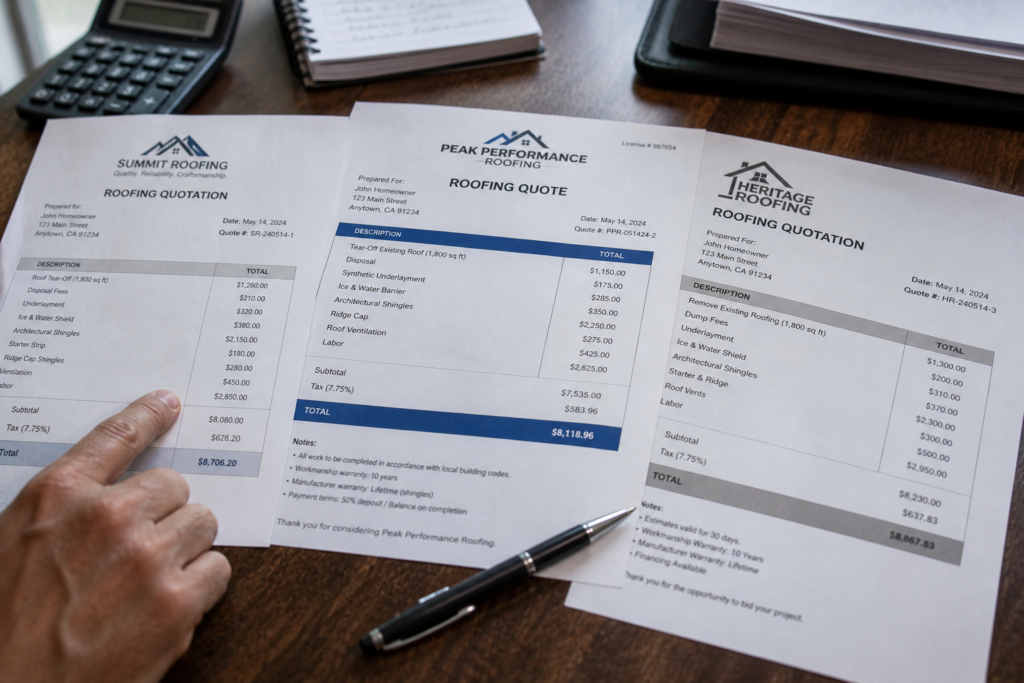
Getting multiple quotes is essential — but comparing them incorrectly can lead to a worse decision than getting just one.
Three quotes give you a realistic market range. One quote gives you nothing to compare against. Two quotes still leave room for manipulation.
A roofing quote should itemise:
| Line Item | What to Check |
|---|---|
| Material type & brand | Is it a premium brand or a cheaper substitute? |
| Labour cost | Is this all-inclusive or subject to extras? |
| Removal of old roofing | Some contractors exclude this |
| Disposal fees | Old materials need to be disposed of properly |
| Waterproofing/underlayment | Often excluded in cheap quotes |
| Warranty details | Labour warranty vs material warranty |
| Project timeline | Start date, completion date |
The cheapest quote is rarely the best quote. A contractor quoting 30% below everyone else is cutting corners somewhere — on materials, labour quality, or both.
Any quote that doesn’t break down individual costs is a red flag. You have no way of knowing what you’re paying for, which makes it easy to inflate costs mid-project.
Some contractors are skilled at looking legitimate while cutting every corner. Here are the warning signs that should stop any roofing hire in its tracks.
After heavy rain or hailstorms, pop-up roofing companies appear offering “urgent repairs” and discounted rates. Most are not local, have no established reputation, and disappear after collecting a deposit. Never hire a contractor who approaches you unsolicited.
If one quote is significantly lower than all others, don’t celebrate — investigate. It typically signals the use of inferior materials, unlicensed labour, or plans to charge extras mid-project once your old roof is already stripped.
A standard roofing contract involves a reasonable deposit (10–30%) followed by milestone-based payments. Never pay more than 30% upfront. A contractor demanding 50–100% before work begins is a serious risk.
Verify that the contractor has a registered business address, not just a mobile number. Local contractors have more accountability — they depend on community reputation and are easier to pursue if something goes wrong.
Legitimate contractors don’t pressure you. “This rate is only valid today” is a sales tactic, not a professional offer. A reputable company gives you adequate time to review and compare.
A verbal agreement is worth nothing in roofing. Get everything in writing before a single tile is moved.
Your roofing contract must include:
Do not sign any contract with blank sections, vague language, or missing details. If a contractor refuses to provide a detailed written contract, walk away.
Even well-intentioned homeowners make costly errors when hiring roofing contractors. Avoid these six mistakes:
1. Hiring on Price Alone The lowest quote almost always means the lowest quality. Compare value — not just cost. A contractor who uses branded materials, provides a 5-year workmanship warranty, and completes the job on time delivers far more value than someone who saves you ₹10,000 upfront but causes ₹1,00,000 in water damage six months later.
2. Not Checking Insurance Many homeowners assume any “professional” contractor is insured. They’re not. Always ask for a certificate and verify it. A single on-site accident without proper insurance can expose you to legal liability.
3. Ignoring Local Expertise Roofing requirements vary by region — rainfall patterns, temperature fluctuations, local building codes, and the prevalent roofing styles in your area all matter. A contractor with strong local experience understands these nuances. For Indian homeowners, understanding the importance of regular roof maintenance in a tropical or monsoon climate is essential.
4. Not Getting Multiple Quotes Accepting the first quote — even if it seems reasonable — is a missed opportunity to understand market pricing and contractor quality differences.
5. Skipping the Reference Check Online reviews are helpful, but direct conversations with past clients reveal far more about reliability, communication, and post-job support.
6. Paying Too Much Upfront Never pay the full amount or a majority upfront. Structure payments around completion milestones to maintain leverage and accountability throughout the project.
Always get a minimum of three quotes. This gives you a realistic price range and allows you to compare what each contractor includes in their scope. A single quote gives you no benchmark. Three quotes reveal price patterns, material quality differences, and how clearly each contractor communicates their work.
A standard and fair deposit is between 10% and 30% of the total project cost. Anything higher — especially requests for 50% or more upfront — is a red flag. Legitimate contractors structure payments around project milestones, not large advance sums.
Ask the contractor to provide a current certificate of insurance. Do not accept verbal assurances. Once you receive the certificate, call the insurance provider directly to verify the policy is active and covers the type of work being performed on your property.
A material warranty covers defects in the roofing product itself — usually provided by the manufacturer. A workmanship warranty covers errors or failures caused by how the contractor installed the material. Both are necessary. A good contractor provides a minimum of 2–5 years workmanship warranty on top of the material warranty.
Local contractors often offer more accountability, better knowledge of regional climate and building codes, and more personalised service. Large national chains may have brand recognition but can lack local expertise and are harder to hold accountable post-project. For most residential roofing jobs, a reputable local contractor with a strong portfolio is the better choice.
It depends on your region, roof slope, and budget. Metal roofing is highly durable, low-maintenance, and ideal for areas with heavy rainfall. Tile roofing offers aesthetic appeal and excellent thermal insulation. Read our detailed comparison of Metal Roofing vs Tile Roofing to make an informed decision before hiring a contractor.
Even in urgent situations, don’t skip the vetting process entirely. Spend 30 minutes checking Google reviews, verifying insurance, and asking for a written scope of work. Learn more about emergency leak management in our guide on how to repair a leaking roof while you source a qualified contractor.
Most residential roof replacements take between 1 to 5 days depending on roof size, material type, and weather conditions. A reputable contractor will give you a specific project timeline upfront and communicate any delays transparently as the project progresses.
Choosing the right roofing contractor is one of the most consequential home improvement decisions you’ll make. A strong roof protects your home for 20–30 years. A poor one costs you that and more in repairs, replacements, and stress.
Here are your four key takeaways:
The right roofing contractor won’t rush you, won’t pressure you, and won’t dodge your questions. They’ll show you their past work, provide references willingly, and give you a clear, itemised contract.
Your roof deserves professional attention. So does your decision about who installs it.
Ready to work with a trusted roofing expert? Contact Royal Roofs today and get a transparent, obligation-free assessment for your home.
You’ve done the research. You know what to look for, what questions to ask, and what red flags to avoid.
Now it’s time to take action — with a roofing company that checks every box.
Royal Roofs is a licensed, insured, and experienced roofing contractor serving homeowners across India. We offer transparent pricing, detailed written contracts, and workmanship warranties on every project — residential or commercial.
Here’s what you get when you reach out to us:
Don’t wait for a leak to tell you your roof needs attention.
Or explore our work first — see the quality we deliver on every project at royalroofs.in/our-work/