
Your roof is leaking. Water stains are spreading across your ceiling, and the next monsoon is weeks away. Now comes the question every homeowner dreads: do you waterproof the roof or replace it entirely?
This guide cuts through the confusion. By the end, you’ll know exactly which solution fits your situation, and how to avoid the most expensive mistakes homeowners make when dealing with roof leaks. Let’s settle this once and for all.
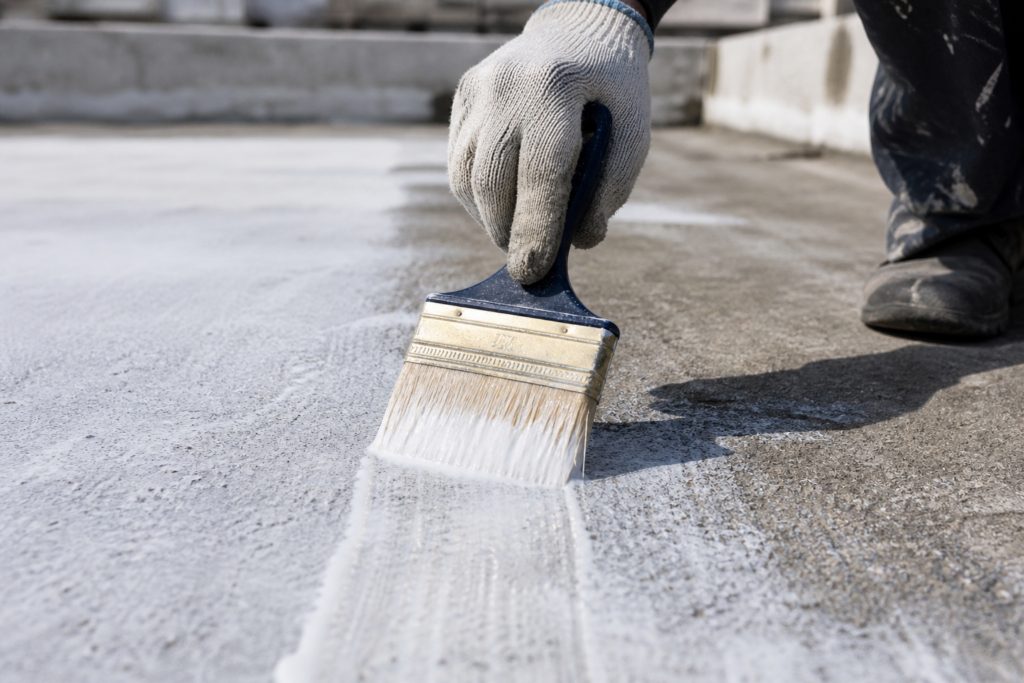
Roof waterproofing is a protective treatment applied to your existing roof surface to seal cracks, pores, and weak joints that allow water to penetrate. Think of it as a heavy-duty raincoat for your concrete or tile roof.
Modern waterproofing systems use advanced materials like crystalline waterproofing compounds, polymer-modified coatings, bituminous membranes, and liquid-applied polyurethane systems. When applied correctly by a qualified contractor, these treatments bond chemically with the substrate — sealing the surface down to a microscopic level.
The waterproofing process typically involves:
A well-executed waterproofing job lasts 7–15 years, depending on the product quality, workmanship, and annual maintenance. It is the right solution when your roof structure is fundamentally sound but the surface has developed permeability due to age, hairline cracks, or poor original finishing.
For a deeper dive into how to stop an active leak before your waterproofing appointment, read our guide on How to Repair a Leaking Roof.
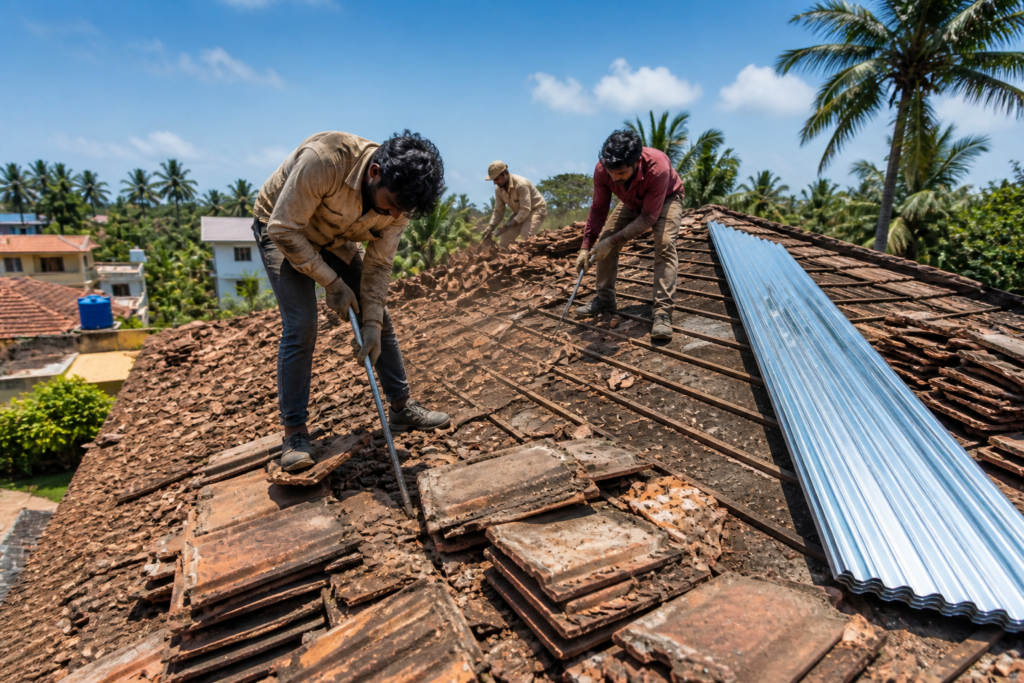
Roof replacement means removing the existing roofing material entirely — whether that’s old clay tiles, concrete slabs, asbestos sheets, or deteriorated waterproofing layers — and installing a completely new roofing system from scratch.
This is a significant structural intervention. It is the right call when the roof has reached end-of-life, when structural members like purlins or rafters have rotted or corroded, or when the roof has sustained damage too extensive for surface treatment to fix.
A standard roof replacement project includes:
Depending on roof size and chosen material — metal roofing, clay tile, concrete slab, or polycarbonate — a replacement project for a typical Indian home (1,000–1,500 sq ft roof) takes 5–15 working days and costs significantly more than a waterproofing treatment.
Curious about what material to choose for a new roof? Compare your options in our detailed breakdown of Metal Roofing vs Tile Roofing.
Understanding the distinction between these two approaches is the foundation of making the right decision. The table below captures the most important comparison points:
| Factor | Roof Waterproofing | Roof Replacement |
|---|---|---|
| Best for | Structurally sound roofs with surface-level leaks | Severely damaged, aged, or structurally compromised roofs |
| Lifespan of solution | 7–15 years (with maintenance) | 20–50 years (depending on material) |
| Project duration | 1–3 days | 5–15 days |
| Disruption level | Low | High |
| Structural repairs | Not included | Often included |
| Ideal roof age | Under 15–20 years | Over 20–25 years or heavily damaged |
| Recurring leaks | Solved if correctly applied | Permanently resolved |
| Value addition | Moderate | Significant |
The key insight here: waterproofing is not a lesser option — it’s the right tool for the right situation. Replacing a roof that only needed waterproofing is one of the most common and expensive mistakes Indian homeowners make.
This is the most important question, and the answer depends on a systematic assessment — not guesswork.
Your roof is a good candidate for waterproofing treatment if you notice:
You need to seriously consider replacement when:
Pro tip from Royal Roofs: Before committing to either option, get a professional structural inspection. A good roofing contractor will not push you toward replacement if waterproofing will solve the problem — that honesty is exactly what you should look for when evaluating contractors.
For a complete list of warning signs, see our article on 5 Signs You Need a Roof Replacement.
Knowing what not to do is just as important as knowing the right solution. These are the six most costly mistakes we see repeatedly at Royal Roofs.
Why it’s a problem: Waterproofing treats the surface, not the structure. If your slab is cracked through or your purlins are corroded, applying a coating only delays the inevitable — and you’ll lose both the treatment cost and face a larger repair bill later.
What to do instead: Get a structural inspection first. Always.
Why it’s a problem: Discount contractors often apply basic cement slurry or recycled bitumen — materials that fail within one to two monsoon seasons. The cost saving evaporates quickly.
What to do instead: Ask specifically which waterproofing product brand and system will be used, and verify it with the manufacturer’s data sheet.
Why it’s a problem: Even the best waterproofing membranes develop minor cracks or delamination over time. Without annual inspection and minor touch-ups, small issues become major leaks.
What to do instead: Schedule an annual roof inspection every March — before monsoon season — as a standard maintenance routine. Read our full guide on the Importance of Regular Roof Maintenance.
Why it’s a problem: Water that enters through a crack travels through the concrete and compromises reinforcement steel. Corrosion of steel inside the slab is invisible until the damage is severe — and at that point, replacement is unavoidable.
What to do instead: Treat any active leak within one to two months of first noticing it.
Why it’s a problem: A flat roof with poor drainage will pond water for days after rain. No waterproofing system is designed to hold standing water indefinitely — ponding accelerates delamination.
What to do instead: Ensure proper slope (minimum 1:100) and clear drainage outlets before applying any waterproofing treatment.
Why it’s a problem: In many cases, only the bathroom overhead, terrace parapet, or kitchen roof is leaking. Replacing the full roof is wasteful and unnecessary.
What to do instead: Commission a zone-specific repair after identifying the exact source of the leak.
If your roof is under 20 years old, has isolated leak points, and the structure shows no sagging or widespread cracking, waterproofing is likely sufficient. If the roof is over 25 years old, has recurring leaks despite previous repairs, or shows structural deformation, replacement is probably necessary. A professional inspection will give you a definitive answer.
A professionally applied waterproofing system using quality products like crystalline compounds or polyurethane membranes typically lasts 7–15 years in Indian conditions, depending on annual rainfall, roof usage, and maintenance. Annual inspections before monsoon season significantly extend the effective lifespan.
Waterproofing is not permanent in the sense that all materials have a service life — but it is a durable, long-term solution when applied correctly. Think of it like repainting your home: it needs periodic renewal, but it effectively protects your structure for years at a time.
DIY waterproofing using retail products is possible for very small areas or minor cracks, but it is not recommended for full roof treatment. Professional application ensures correct surface preparation, product selection, and application thickness — all of which directly determine how long the treatment lasts. Poor application is the leading cause of premature waterproofing failure.
A standard roof replacement for a 1,000–1,500 sq ft home typically takes 5–15 working days depending on the roofing material, structural repairs required, and workforce size. Weather delays during monsoon can extend this timeline, which is why replacement projects are best scheduled between October and March.
Ask which specific waterproofing product or system they will use, whether they will address drainage and slope issues, what warranty they offer (both workmanship and material), and whether they can share references or photos from similar past projects. For full guidance, see our article on How to Choose the Right Roofing Contractor.
When your roof is leaking, the decision between waterproofing and replacement comes down to one thing: the structural condition of your roof, not just the size of the leak.
Roof waterproofing is the smarter, faster, and far more affordable solution for roofs under 20 years old with surface-level permeability issues. It delivers lasting protection — up to 15 years — at a fraction of replacement cost. Roof replacement is the right call when the structure itself has failed: sagging decks, corroded reinforcement, rotted timber, or a roof that has simply reached the end of its service life.
Three things to remember:
Royal Roofs has helped hundreds of homeowners across Karnataka make this decision correctly — saving them money and protecting their homes for years ahead. If your roof is leaking, the first step is a professional assessment. Don’t guess. Get it inspected.
Contact Royal Roofs for a Free Roof Inspect
You’ve read the guide. You know the signs. But nothing replaces a trained eye on your actual roof.
At Royal Roofs, we offer a free on-site roof inspection — no obligation, no sales pressure. Our engineers assess your roof’s structural condition, identify the exact source of the leak, and give you a straight, honest recommendation: waterproofing or replacement, whichever is right for your situation.
Here’s what you get with every free inspection:
Or call us directly to speak with a roofing specialist.
View Our Completed Projects | Explore Our Services | About Royal Roofs