
Your roof is the first and last line of defence against Kerala’s relentless monsoons. Yet most homeowners pick roofing materials the same way they pick floor tiles — by looks and price alone. That decision costs thousands in repairs within a few years.
Kerala receives over 120 days of rainfall annually. High humidity, wind-driven rain, and intense post-monsoon heat create a punishing cycle that destroys unsuitable roofing materials from the inside out. Choose wrong, and you’re looking at leaks, mould, structural rot, and complete roof replacement within 10–15 years.
This guide cuts through the noise. We’ve evaluated six major roofing materials against Kerala’s specific climate demands — durability, waterproofing, thermal performance, maintenance cost, and lifespan — so you can make a decision that protects your home for decades. For a broader introduction to roofing systems, see our Ultimate Guide to Roofing.
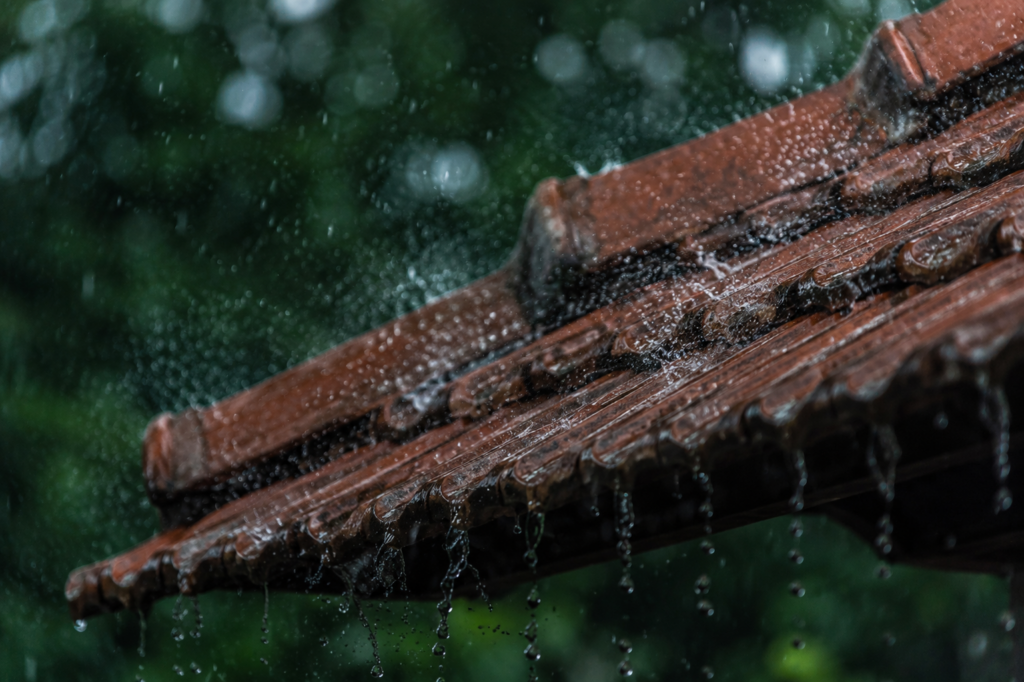
Most roofing guides are written for dry or temperate climates. Kerala is neither. It sits in a tropical monsoon zone with three distinct seasonal stressors that no single material handles equally well:
The result? A roof in Kerala must simultaneously resist water infiltration at high velocity, handle thermal cycling without cracking, resist biological growth (algae, moss, lichens), and remain structurally stable under the weight of accumulated water. According to the India Meteorological Department, several Kerala districts regularly exceed 4,000mm annually — placing them among the world’s most extreme rainfall zones.
Key Insight: A roof that works perfectly in Delhi or Bengaluru can fail within 5 years in Kerala. The primary failure modes are water ingress at joints, corrosion from high humidity, and biological degradation. Material choice must account for all three.
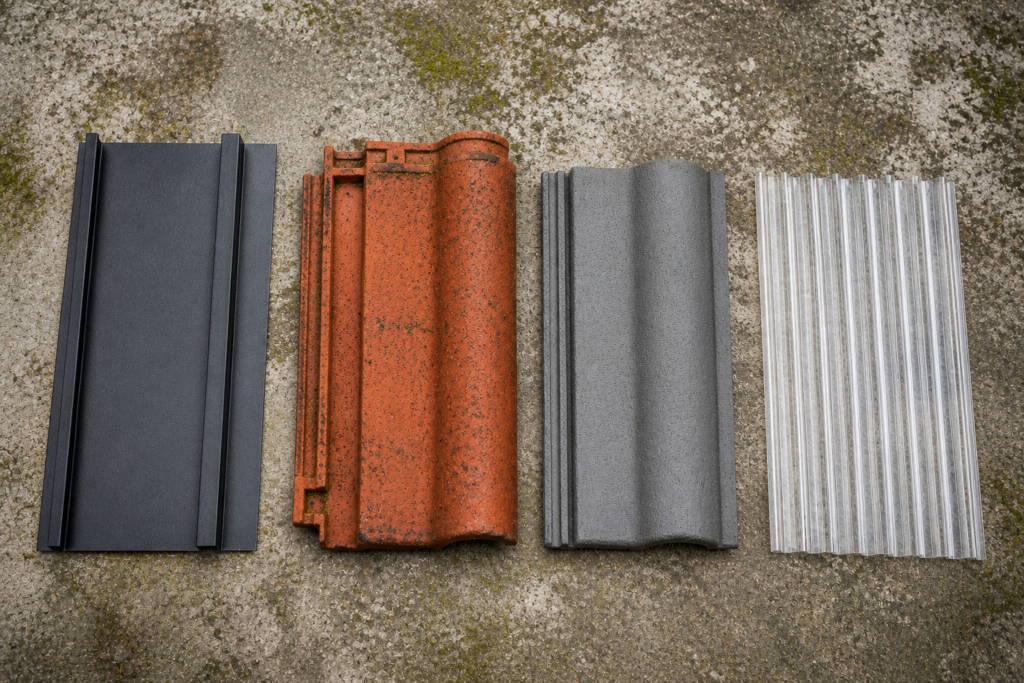
Not all materials perform equally in a tropical monsoon climate. Here’s an expert breakdown of each option, with honest assessments of strengths and weaknesses for Kerala-specific conditions.
Metal roofing has become the fastest-growing segment in Kerala’s residential market — and for good reason. Modern colour-coated steel or Galvalume (steel-aluminium-zinc alloy) panels offer excellent water runoff due to their smooth, sloped surface. A properly installed metal roof with standing-seam joints has virtually zero water infiltration points.
The iconic terracotta roof tile has been Kerala’s default choice for centuries — and it remains excellent for a reason. Clay tiles are naturally waterproof, breathable, and thermally comfortable. The steep-pitched traditional Kerala roof design (60°+ pitch) was engineered specifically for monsoon drainage.
Flat RCC roofs dominate urban Kerala — apartments, commercial buildings, and modern homes. They’re structurally robust and thermally massive. The critical variable is waterproofing quality. A poorly waterproofed flat roof in Kerala will leak within two monsoon seasons.
For a detailed comparison of when to waterproof versus replace entirely, read our guide on Roof Waterproofing vs. Roof Replacement.
Fibre cement (asbestos-free) remains widely used in rural Kerala for agricultural buildings, budget homes, and temporary structures. It’s low cost and easy to install, but becomes brittle over time, discolours quickly in humid conditions, and has poor thermal performance.
Used primarily for porticos, car sheds, and verandahs. Multi-wall polycarbonate panels handle moderate rainfall well, but Kerala’s UV intensity degrades standard sheets within 5–8 years. UV-protected grades extend this to 15 years.
Gaining traction in contemporary Kerala architecture. High-quality SBS-modified bitumen shingles from brands like GAF or Owens Corning perform better than standard grades in the heat-UV combination common in Kerala.
See the comparison table below for a side-by-side breakdown across the five factors that matter most in Kerala’s climate:
| Material | Monsoon Performance | Thermal Comfort | Lifespan | Cost (₹/sq.ft installed) | Maintenance | Rating |
|---|---|---|---|---|---|---|
| Metal (Galvalume / Colour Steel) | Excellent | Good (with insulation) | 40–60 yrs | ₹90–₹170 | Very Low | ⭐ BEST |
| Clay Tiles (Mangalore) | Excellent | Excellent | 30–50 yrs | ₹110–₹200 | Medium | ⭐ BEST |
| RCC Flat Roof + Waterproofing | Good (quality-dependent) | Good | 20–25 yrs | ₹200–₹300 | High | ✅ GOOD |
| Bitumen Shingles | Good | Average | 20–30 yrs | ₹120–₹200 | Medium | ✅ GOOD |
| Polycarbonate | Moderate | Poor | 10–15 yrs | ₹70–₹130 | Low | ⚠️ PARTIAL USE |
| Fibre Cement | Average | Poor | 15–20 yrs | ₹45–₹75 | High | ⚠️ BUDGET ONLY |
Costs reflect fully installed rates (material + structure + labour) as of May 2026. Prices vary by district — Kochi and Thiruvananthapuram typically run 8–12% higher than interior districts. Always request itemised quotes from at least three contractors.
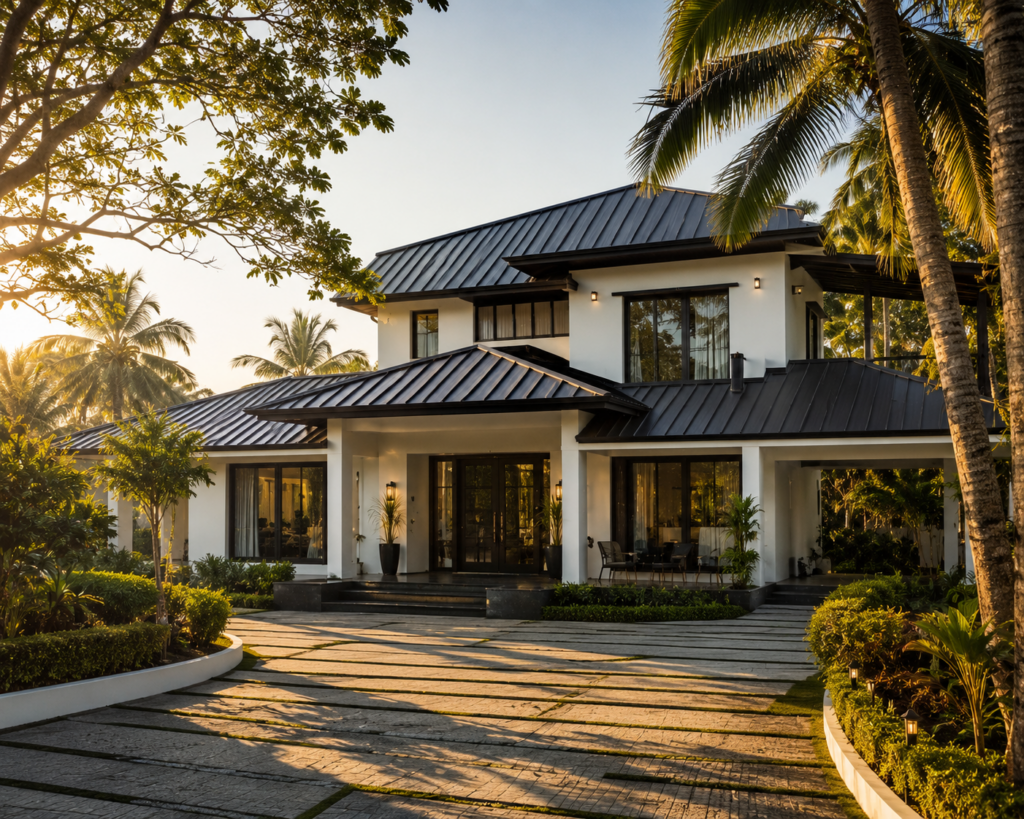
After evaluating all six options, two materials stand out as the best roofing materials for Kerala’s climate — each suited to different architectural styles and budget ranges.
High-quality Mangalore tiles or Athangudi-style clay tiles remain the gold standard for traditional Kerala-style homes with sloped roofs. They’re thermally comfortable without insulation, naturally breathable, and architecturally authentic.
Pro tip: Pair clay tiles with a RCC ring beam structure rather than wooden rafters. This eliminates the rot risk that plagued older traditional homes during monsoon seasons.
For contemporary Kerala architecture — modern flat-facade homes, villas, and commercial properties — colour-coated Galvalume or aluminium standing-seam roofing is the superior choice. It offers the lowest lifetime cost of ownership, requires almost zero maintenance, and when combined with a glass wool insulation layer, provides excellent thermal performance.
A quality metal roof installed today should outlast the building’s structural loan repayment period.
If your current roof is showing signs of failure, don’t wait for the monsoon. Review our checklist on 5 Signs You Need a Roof Replacement to assess your situation accurately.
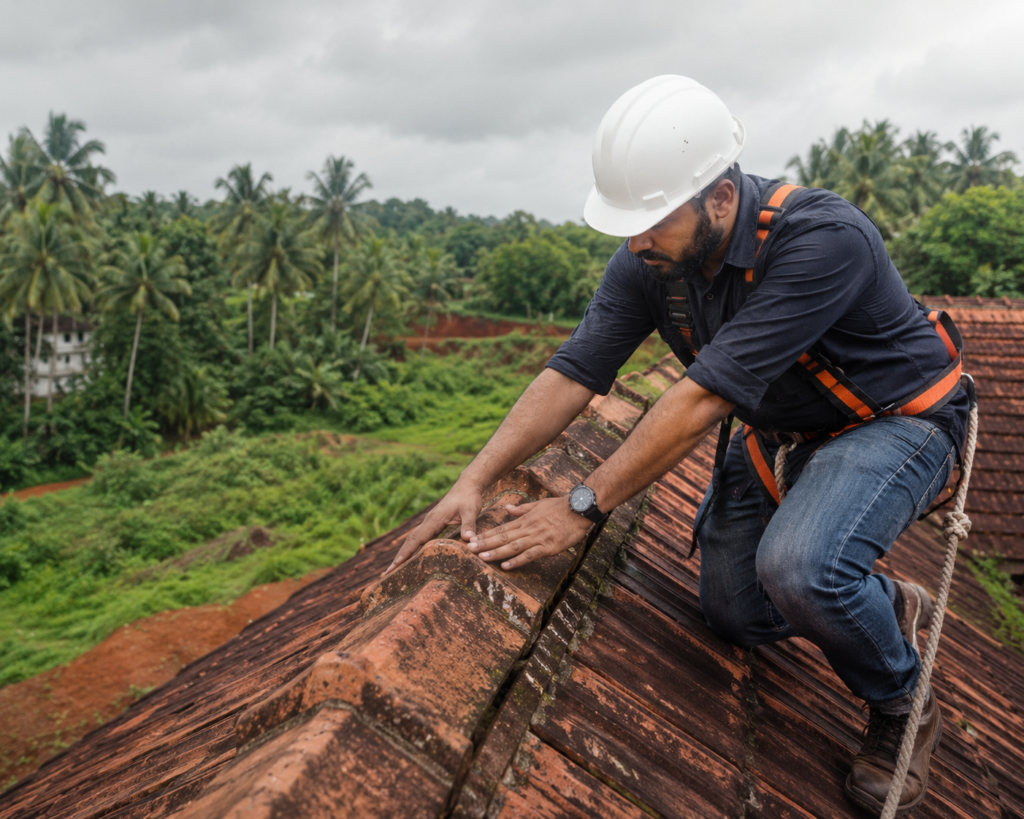
The most expensive roofing errors in Kerala aren’t about material choice alone — they’re about installation, maintenance, and planning failures.
A flat or low-slope roof on a high-rainfall site is a recipe for ponding water and persistent leaks.
Fix: Any pitched roof in Kerala should have a minimum 30° slope. Metal roofs need at least 8–12°. Flat RCC roofs must have a structural slope of at least 1:80 toward drainage points.
Many assume clay tiles are self-waterproofing. Old, porous tiles allow significant water ingress at joints.
Fix: Apply an anti-fungal waterproofing wash on tile roofs every 5–7 years. Consider a secondary bitumen felt underlay during installation.
Poor ventilation traps moisture under metal or tile roofs, accelerating corrosion and biological growth from the inside.
Fix: Install ridge ventilators and soffit vents in every roofing project. Non-negotiable in Kerala’s 70–90% humidity levels.
A ₹15/sq. ft saving on installation can lead to ₹1.5 lakh in damage repairs. Installation quality determines 60% of a roof’s performance.
Fix: Always verify contractor credentials, past project portfolio, and warranty terms. Read our guide on how to choose the right roofing contractor.
Blocked drains, growing moss, and minor crack propagation between April and June cause the bulk of monsoon-season leaks.
Fix: Schedule a pre-monsoon roof inspection every April. See our article on the importance of regular roof maintenance.
Plain galvanised steel corrodes 3–5x faster in Kerala’s coastal humidity and salt air compared to Galvalume panels.
Fix: For homes within 10km of the coastline (Alappuzha, Kochi, Thrissur coast, Kozhikode), always specify Galvalume or aluminium roofing — not standard GI sheets.
For sloped traditional roofs, high-quality Mangalore clay tiles perform best in Kerala’s heavy monsoon rainfall. For modern flat or low-slope roofs, standing-seam Galvalume metal roofing offers the most reliable waterproofing with minimal maintenance. Both materials, when correctly installed, comfortably handle Kerala’s 3,000–4,000mm annual rainfall.
A properly installed colour-coated Galvalume metal roof lasts 40–60 years in Kerala’s climate. Coastal areas (within 10km of the sea) should use marine-grade Galvalume or aluminium for optimal corrosion resistance. Look for PPGI or PVDF-coated sheets with a minimum 25-year colour warranty.
Yes, absolutely. Modern high-fired clay tiles are denser, less porous, and more uniform than older versions. For sloped roof designs, clay tiles offer superior thermal comfort without insulation, natural breathability that prevents condensation, and a 30–50 year lifespan — making them still the best thermal performer in Kerala’s climate.
Repeated failure usually indicates one of three root causes: hairline cracks in the slab reopening with thermal movement, waterproofing applied over existing failed layers (trapping moisture), or inadequate structural slope causing water ponding. If you’ve had more than two failed treatments, a metal roof overlay is a more cost-effective long-term solution.
A professional roof inspection once a year — ideally in April before the southwest monsoon — is the most cost-effective maintenance schedule for Kerala homes. This covers drain clearing, moss/algae treatment, joint inspection, and early crack identification. Learn more about regular roof maintenance best practices.
Metal roofs without insulation can be noticeably louder during heavy rain. However, with a 50mm glass wool insulation layer (standard in quality installations), the sound level is comparable to a tiled roof. Many homeowners actually report the ambient rain sound on a well-insulated metal roof to be pleasant rather than intrusive.
For coastal Kerala, corrosion resistance is paramount due to salt-laden air. The best choices are: (1) Galvalume or aluminium standing-seam metal roofing with a PVDF coating, or (2) high-density clay tiles (naturally corrosion-resistant). Standard GI sheets corrode rapidly within 5–8 years in coastal zones and should be avoided entirely.
Kerala’s climate is unforgiving to poorly chosen or badly installed roofs. The good news? The right material — chosen for your specific location, roof design, and budget — will outlast your mortgage and protect your family’s most valuable asset through decades of monsoons.
Here are the four key takeaways from this guide:
Don’t wait for the next monsoon to discover your roof’s weaknesses. Explore our roofing services or browse our completed projects to see the quality we bring to every Kerala roof. If you’re unsure whether to repair or replace, our article on how to repair a leaking roof will help you make that call confidently.
Choosing the right roofing material is only half the battle — the other half is getting it installed by a team that understands Kerala’s climate inside out.
At Royal Roofs, we’ve completed 500+ roofing projects across Kochi, Thrissur, Kozhikode, Thiruvananthapuram, and beyond. Whether you need a new roof, a replacement, or an honest second opinion on your existing one — we’re here to help.
Here’s what you get when you reach out:
Don’t wait for the monsoon to expose a weak roof.
Book Your Free Roof Assessment Today →
Or explore what we’ve done for homeowners like you: View Our Completed Roofing Projects | See All Our Roofing Services