
Your roof does more work than any other part of your home — and gets the least attention.
Most homeowners only think about their roof when something goes wrong: a leak appears, a tile cracks, or a ceiling stain shows up after the rains. By then, the damage is already spreading — and the repair bill is growing.
A well-maintained roof can last 30–50 years. A neglected one fails in 10. The difference isn’t luck. It’s knowledge.
This ultimate guide to roofing covers everything you need — from understanding roof types and materials, to spotting early warning signs, choosing a trustworthy contractor, and knowing when a repair simply won’t cut it anymore. Whether you’re building a new home, renovating an existing one, or dealing with an urgent roofing issue, this guide gives you the expert clarity to make the right call.
For a deeper look at our roofing services and past work, explore what Royal Roofs does for homeowners across India →
Before you pick a material or hire a contractor, you need to understand the basic roof structures available — because your climate, architecture, and budget all influence which type performs best for your home.
Flat Roofs (RCC Roofs) The most common residential roof type in India. Reinforced cement concrete (RCC) flat roofs are durable, allow additional floor construction, and work well in low-rainfall zones. The challenge? They require proper waterproofing systems to prevent water pooling and seepage.
Sloped or Pitched Roofs Common in high-rainfall coastal areas and traditional architecture, sloped roofs shed rainwater efficiently. They’re paired with materials like clay tiles, Mangalore tiles, or metal sheets. Excellent ventilation and aesthetic value make them a popular choice for bungalows.
Metal Sheet Roofs Corrugated GI sheets, standing seam metal panels, and colour-coated roofing sheets are widely used in industrial, commercial, and increasingly residential buildings. Lightweight, fast to install, and excellent for heat reflection when coated properly.
Mangalore Tile Roofs A heritage roofing system beloved across Karnataka, Kerala, and Goa. These interlocking clay tiles are fired at high temperatures and last decades when maintained. They offer natural insulation and a distinctive red-brown appearance.
Polycarbonate & Tensile Roofs Used for pergolas, car parking covers, terraces, and extensions. These are lightweight modern solutions ideal for covered outdoor spaces without full construction.
Choosing the right roofing material is one of the most important decisions you’ll make — and it’s not just about looks. Lifespan, heat resistance, and local weather all determine what works best.
| Material | Lifespan | Heat Resistance | Best For |
|---|---|---|---|
| Clay / Mangalore Tiles | 40–60 years | Excellent | Coastal, heritage homes |
| Concrete Tiles | 30–50 years | Good | Urban residential |
| Metal (GI / Aluzinc) | 25–40 years | Very Good | Industrial, fast builds |
| Colour-Coated Sheets | 20–35 years | Good | Sheds, extensions |
| RCC + Waterproofing | 30+ years | Moderate | Flat roof homes |
| Polycarbonate | 10–15 years | Low | Pergolas, carports |
For a direct comparison of two of India’s most popular options, read our detailed breakdown: Metal Roofing vs. Tile Roofing — Which Is Right for You?
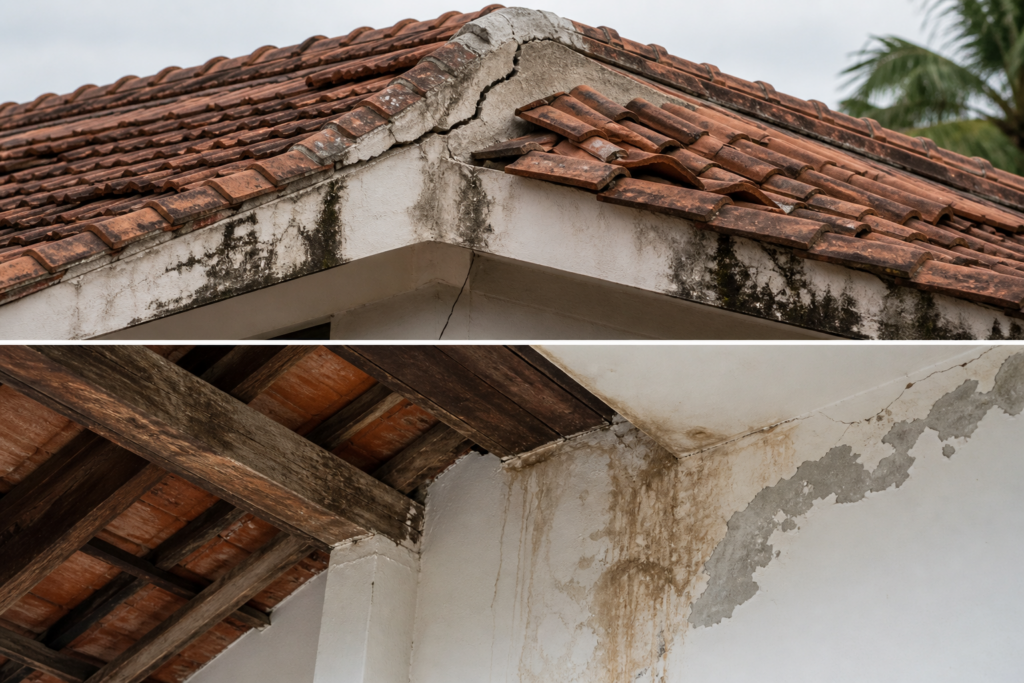
Most roof failures don’t happen suddenly. They build slowly — through ignored cracks, missed maintenance, and small leaks that expand with every rain.
1. Water Stains on Your Ceiling Brown or yellow rings on your ceiling are the most visible sign of an active roof leak. Even if the stain is dry, the water source above it isn’t. Every monsoon season makes it worse.
2. Missing, Cracked, or Curling Tiles/Sheets Physically damaged roofing materials leave your underlayer exposed. A single missing tile during heavy rain allows liters of water to enter your roof structure per hour.
3. Sagging Roof Sections Any visible dip or sag in your roofline is a structural red flag. This indicates moisture has been absorbed into the decking or rafters — meaning the damage has gone well beyond the surface.
4. Granule Loss or Rust On metal roofs, surface rust spreading from edges or fasteners signals corrosion. On coated tiles, granule loss in gutters shows material breakdown. Both are signs your roof’s protective layer is failing.
5. Daylight Through the Roof Go into your attic or top-floor ceiling void during daylight. If you see light filtering through — you have gaps. Where light enters, water follows.
Bonus: Age If your roof is over 20 years old and hasn’t been professionally inspected, it’s overdue. Even a structurally intact old roof likely has compromised waterproofing, sealant deterioration, or fastener corrosion.
We’ve written a complete breakdown of this topic — read the 5 Signs You Need a Roof Replacement before your next monsoon season.
A leaking roof is urgent. Water damage compounds quickly — one week of an active leak can cause mould growth, damaged insulation, swollen timber, and compromised electrical fittings in your ceiling.
Here’s how to approach roof leak repair the right way:
Step 1: Locate the Source (Not Just the Symptom) The stain on your ceiling is rarely directly below the leak source. Water travels along rafters, joists, and membranes before dripping down. Trace the path upward during or immediately after rain.
Step 2: Temporary Containment If you’re waiting for a professional, use a waterproof tarp secured over the affected area. Never attempt to seal a wet surface — adhesives and sealants don’t bond to wet materials.
Step 3: Identify the Failure Type
Step 4: Professional Assessment Any leak that recurs after a DIY fix, or that spans more than 2–3 sq metres, requires professional inspection. What looks like a surface issue often has deeper structural causes.
Step 5: Waterproofing Application After fixing the structural cause, apply a quality waterproofing system — crystalline, cementitious, or polyurethane-based — depending on the surface type. This is not optional. It’s the layer that prevents the next leak.
For a full step-by-step walkthrough with visuals, read: How to Repair a Leaking Roof: A Homeowner’s Action Guide
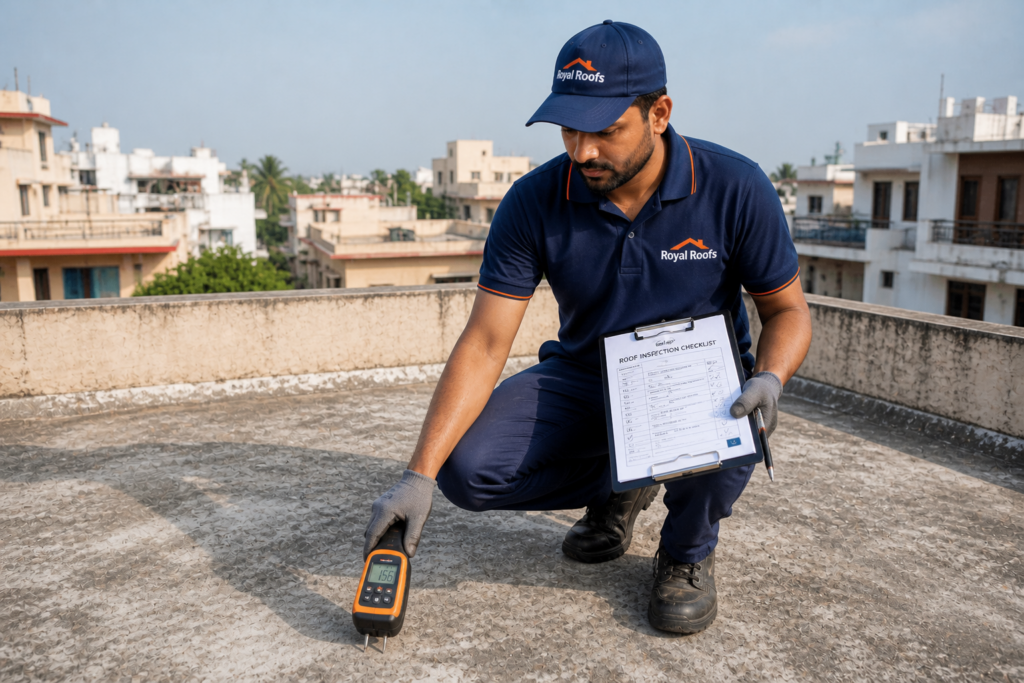
Here’s a number most homeowners don’t know: preventive roof maintenance costs 4–6x less than emergency repair.
A professional roof inspection every 12–18 months, combined with basic seasonal upkeep, dramatically extends roof lifespan and catches problems before they escalate.
Pre-Monsoon (April–May)
Post-Monsoon (October–November)
Every 3–5 Years
Why maintenance matters beyond repairs: Regular maintenance preserves your roof warranty validity, maintains property resale value, and keeps your home’s insurance claims defensible.
Read our comprehensive article on Why Regular Roof Maintenance Is Critical for Every Indian Homeowner to build a year-round maintenance plan.
This is the question every homeowner eventually faces — and getting it wrong in either direction is costly.
Choose Repair When:
Choose Replacement When:
The 30% Rule: If the cost of repair exceeds 30% of what a new roof would cost, replacement is almost always the smarter financial decision — especially on older roofs.
Our article on 5 Signs You Need a Roof Replacement walks you through the exact red flags that signal it’s time to stop repairing and start replacing.
Your roof is a significant investment. The contractor you choose determines whether that investment lasts 30 years or fails in 5.
7 Questions to Ask Every Roofing Contractor Before Hiring
Red Flags That Should End the Conversation:
For our full contractor selection framework, read: How to Choose the Right Roofing Contractor in India
See examples of our completed roofing projects across India on our Our Work page — real homes, real results.
Even well-intentioned homeowners make roofing decisions that cost them significantly. Here are the six most common — and what to do instead.
Mistake 1: Ignoring Small Leaks “It only leaks when it rains heavily” is the most expensive sentence in home maintenance. Small leaks indicate compromised waterproofing — the source expands every time water hits it.
The fix: Treat any leak, however minor, as urgent. A ₹3,000 repair today prevents a ₹40,000 structural repair next year.
Mistake 2: Applying New Roofing Over Old Layers Laying new tiles or sheets over existing damaged material traps moisture and masks structural issues. It adds weight and creates a false sense of security.
The fix: Always strip the existing roof before installation. Yes, it costs more. It also means your new roof actually lasts.
Mistake 3: Skipping Professional Waterproofing Many homeowners or budget contractors apply surface-level paint waterproofing instead of proper membrane systems. Paint peels. Membranes last.
The fix: Insist on crystalline, cementitious, or PU membrane waterproofing on all flat surfaces — not exterior wall paint marketed as waterproof.
Mistake 4: Hiring on Price Alone The lowest quote almost always means lower-grade materials, unskilled labour, or missing steps (like waterproofing or flashing installation).
The fix: Compare at least three written quotes. Evaluate scope, materials, and warranty — not just the bottom line.
Mistake 5: Skipping Post-Monsoon Inspections Monsoon season is the ultimate stress test for your roof. What survives isn’t necessarily undamaged — micro-cracks, displaced tiles, and clogged drains often go unnoticed until the next rain.
The fix: Schedule a professional inspection every October–November as a non-negotiable routine.
Mistake 6: DIY Structural Repairs Sealing a small crack yourself is manageable. Replacing roof sections, reflashing chimneys, or repointing ridge tiles without professional knowledge creates new failure points.
The fix: DIY maintenance is fine — cleaning gutters, removing debris. Structural repairs require qualified, experienced roofing professionals.
It depends on the material. Clay and Mangalore tiles last 40–60 years with proper maintenance. Metal roofs typically last 25–40 years. RCC flat roofs with proper waterproofing last 30+ years. Budget sheets and polycarbonate panels generally last 10–15 years. The single biggest factor in roof lifespan is not material — it’s maintenance quality.
If damage affects less than 10–15% of the roof area and the structure is sound, repair is usually sufficient. If the roof is over 20–25 years old, has recurring leaks in multiple areas, or shows sagging, replacement is typically more economical. Read our 5 Signs You Need a Roof Replacement for a full checklist.
Mangalore tiles and metal roofing (particularly Aluzinc-coated sheets) perform best in high-rainfall zones like Karnataka, Kerala, and coastal Maharashtra. Both shed water efficiently and resist moisture absorption. For flat RCC roofs in rainy regions, a quality PU or crystalline waterproofing membrane is essential.
Every 12–18 months is the recommended interval for most residential roofs. In high-rainfall or coastal areas, twice a year (pre- and post-monsoon) is advisable. Roofs over 15 years old should be inspected annually regardless of apparent condition.
Minor surface-level issues like clearing a blocked gutter or replacing a single cracked tile are manageable for a careful homeowner. However, any leak that involves flashing, ridge lines, underlayers, or structural components should be handled by a professional. Improper repairs frequently make the underlying problem worse. See our guide on How to Repair a Leaking Roof for a detailed breakdown.
Start with contractors who have verifiable local references, a physical business address, and proper insurance documentation. Ask specifically about experience with your roof type. Review completed project portfolios. Read our full guide on How to Choose the Right Roofing Contractor for a complete vetting checklist.
Yes — significantly. Studies in the construction industry consistently show that maintained roofs last 40–60% longer than unmaintained ones of the same material. Read why Regular Roof Maintenance Is One of the Most Important Things You Can Do for Your Home.
Your roof is not a passive structure — it’s an active system protecting everything beneath it. When it works, you don’t notice it. When it fails, the consequences touch every room in your home.
The four things every homeowner should take away from this guide:
India’s weather is not gentle on roofs. But a roof built right, maintained well, and repaired promptly will outlast the home’s mortgage, its furniture, and most of its appliances.
Don’t wait for a leak to take your roof seriously. Start with a professional inspection — and let Royal Roofs show you exactly where your home stands.
Get a Free Roof Inspection — Contact Royal Roofs Today →
You now have everything you need to make smarter roofing decisions — but knowledge alone doesn’t fix a failing roof.
Whether you’re dealing with an active leak, planning a roof replacement, or simply want to know where your roof stands before the next monsoon hits, Royal Roofs is here to help.
What you get with a Royal Roofs inspection:
Book Your Free Roof Inspection Today → No obligation. No pressure. Just expert eyes on your roof before it becomes an emergency.
Not ready to book yet? Explore our completed roofing projects to see the quality of work we deliver — or browse all our roofing ser